Read the opening fragment
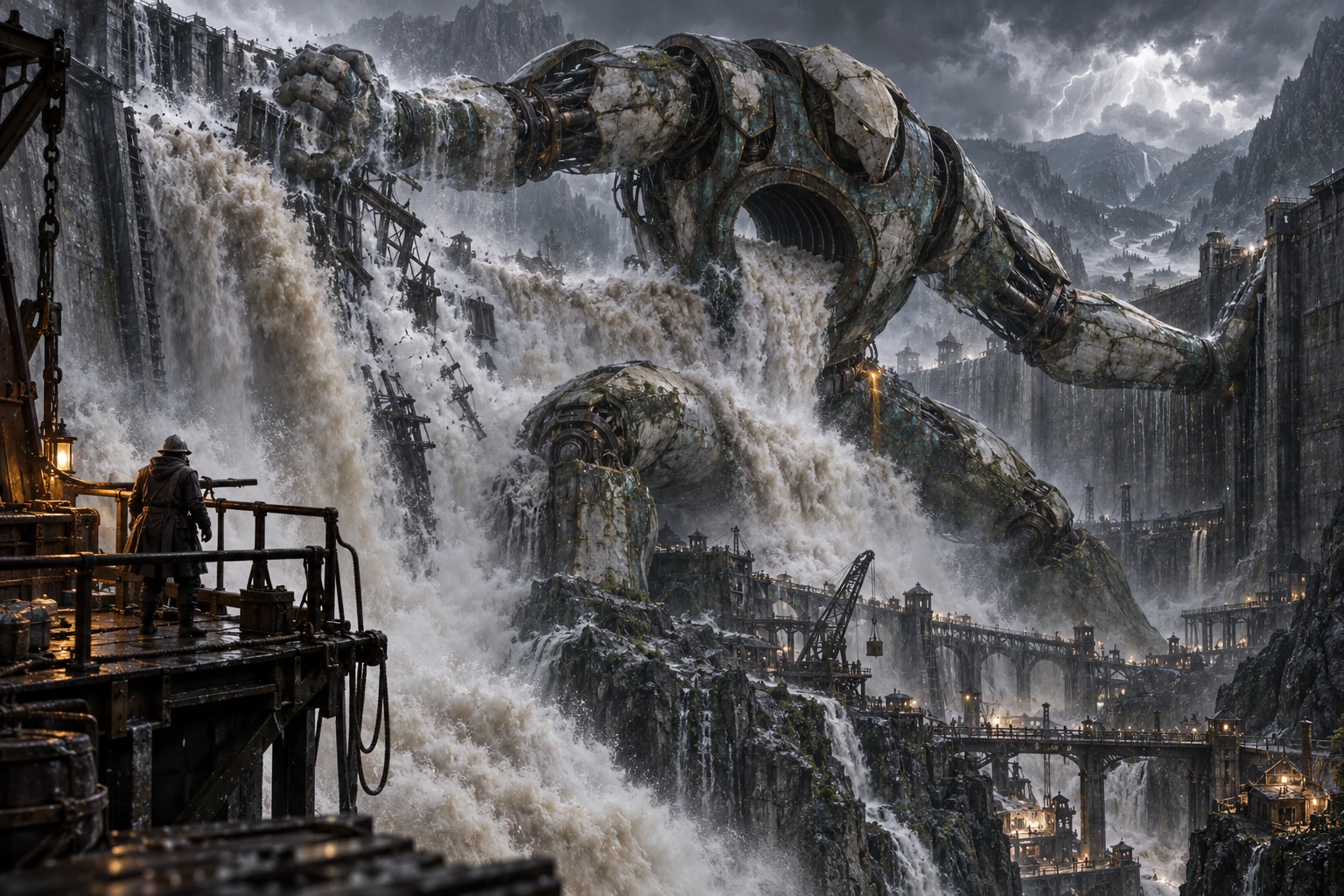
The city missed a breath at dawn.
Mara noticed because the tea did not tremble. For twenty-three years the cup had rattled against its saucer every seventeenth count, when the upper chambers let their pressure into the mountain. That morning the surface lay flat.
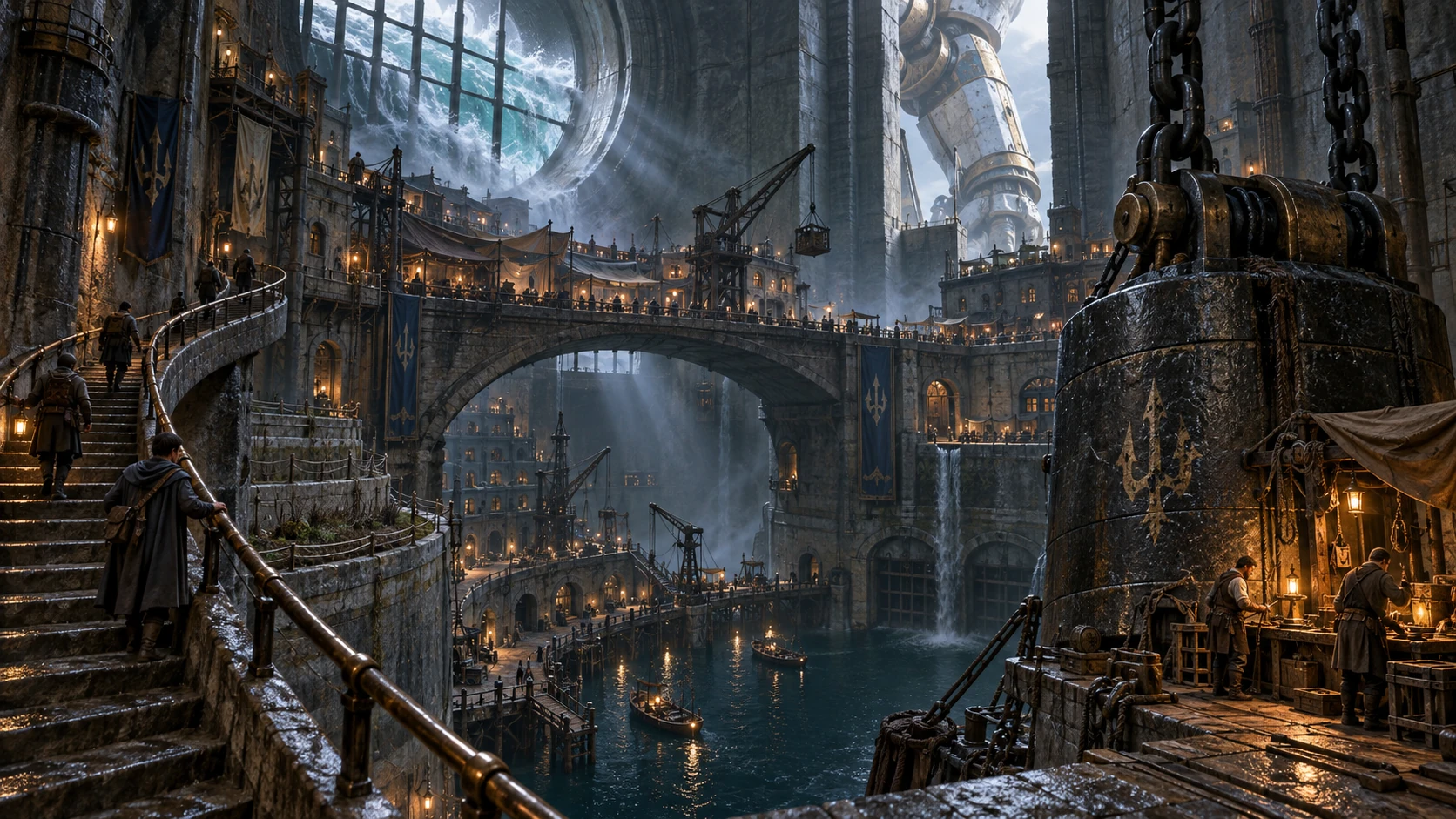
Below the window, ferrymen were already taking their ropes off the public hooks. Nobody rang the alarm. Bells were for accidents. This was something older.
Her father set down the bread knife.
“Take your coat,” he said.
She looked at the dry ceiling, the ordinary bread, the cup that would not move.
“Which one?”
“The one you can swim in.”
On the stair, their neighbor was tying a bedsheet through the handles of a trunk. Her husband had died on the lower ferry in winter. She had spent the spring learning to sleep without hearing his key in the door.
“Leave it,” Mara’s father said.
“It has his things.”
He knelt and tested the knot instead.
Mara went ahead with the pressure key knocking against her thigh. At the seventeenth step she stopped. A sound had come through the stone: a bearing taking weight, slowly, as if the mountain were settling into a chair. Below it lay the clean click of the lower locks closing.
The inspection board beside the landing still showed green. Someone had painted over the lowest district on its little map. Not recently. The paint had cracked.
She put her thumb against the crack and lifted one flake away. Under it, in the same neat hand as the maintenance instructions, were three words.
Permitted to flood.
Behind her, the trunk scraped the stair. Her father had taken one end. The neighbor carried the other. Neither had a hand free for the rail.
Mara turned the pressure key in the inspection door. It would cost her the apprenticeship. That seemed, suddenly, a very small thing to lose.